


Navigation:
- What is Turtle Neck Syndrome
- Causes
- Symptoms
- Treatment Options
- Home Exercises
- Prevention Strategies
- When to Seek Help
- FAQs
| Turtle neck syndrome, also called forward head posture or text neck, occurs when the head extends forward beyond the shoulders. This shift increases strain on the neck and upper back, often leading to pain, stiffness, headaches, and reduced mobility. Common causes include poor posture during screen use, weak muscles, or spinal misalignment. Treatment includes chiropractic adjustments, targeted exercises, and ergonomic changes. |
If your neck feels stiff every morning, your head feels heavy by lunchtime, or you deal with headaches after long hours on your phone or computer, you may be experiencing turtle neck syndrome.
It affects people of all ages, especially those who work at computers or spend hours on devices. That constant forward head posture places tremendous stress on your neck, shoulders, and spine.
I am Dr. Jason Crist, and for over 25 years, I have helped patients in Franklin and Cool Springs overcome neck pain caused by poor posture, tech use, and spinal misalignment.
Turtle neck syndrome is one of the most common conditions I see, and the great news is that it is very treatable with the right approach.
This guide covers:
- What turtle neck syndrome is
- What causes it
- Common symptoms
- Proven treatment options
- Home exercises to correct it
- How to prevent it
- When to seek professional care
Turtle neck syndrome does not have to become a long-term problem. With proper treatment and daily habits, you can correct forward head posture and restore comfort and function.
“Many patients do not realize that what starts as minor neck discomfort from poor phone posture can evolve into chronic pain, headaches, and even nerve compression. The earlier we address turtle neck syndrome, the faster and more complete the recovery.” — Dr. Jason Crist
What is Turtle Neck Syndrome? Understanding Forward Head Posture
Turtle neck syndrome occurs when your head shifts forward in relation to your shoulders. Instead of staying stacked over the spine, the head leans out in front of your body. This places additional stress on your neck muscles, discs, and joints.
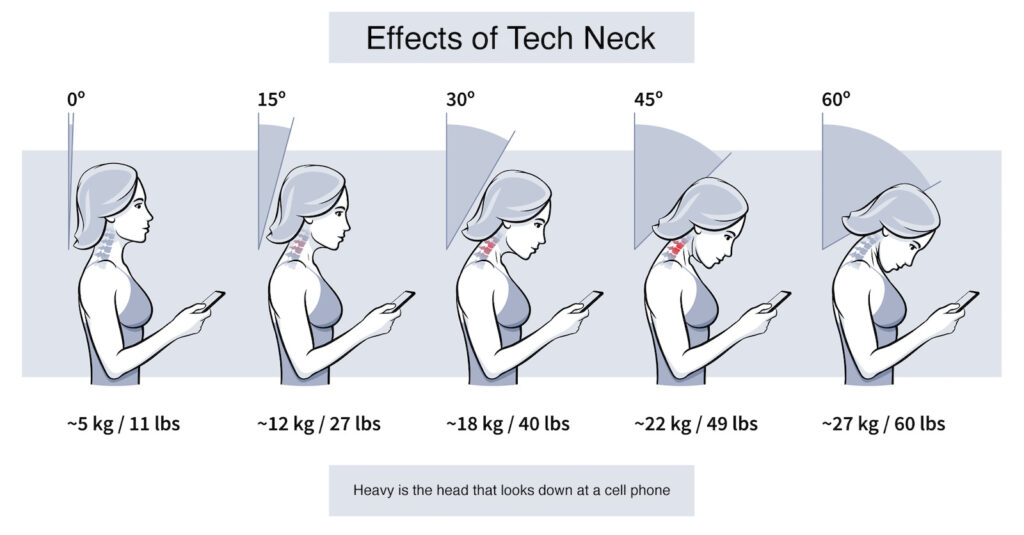
Biomechanics research shows that for every inch the head moves forward, the effective weight on your neck increases by about 10 pounds.
A head that weighs 10-12 pounds in perfect alignment can feel like 30-60 pounds when pushed forward.
Other names for turtle neck syndrome include:
- Forward head posture
- Text neck
- Tech neck
- Computer neck
- Slumped posture
The posture resembles a turtle extending its head out from its shell. It may look subtle, but the strain adds up quickly.
Normal vs Turtle Neck Posture Comparison
| Aspect | Normal Alignment | Turtle Neck Syndrome |
| Head Position | Balanced over shoulders | Head shifted forward |
| Cervical Curve | Natural C shape | Flattened or reversed |
| Muscle Balance | Even muscle tension | Tight neck muscles, weak deep flexors |
| Weight on Neck | 10-12 pounds | 30-60 pounds depending on forward shift |
| Symptoms | None | Pain, stiffness, headaches, nerve symptoms |
What Causes Turtle Neck Syndrome? Risk Factors & Contributing Conditions
Multiple habits and lifestyle factors contribute to this condition. Long hours on screens, poor ergonomics, and weak muscles are among the most common.
| Cause | Specific Contributors | Key Statistics/Details | Who’s Most at Risk |
| Prolonged Screen Use | • Smartphone use• Computer work• Tablet/gaming | • Adults average 3-5 hours daily on phones• Many spend 7+ hours on computers• 58% of adults report device-related neck pain | Office workers, students, gamers, anyone with desk job |
| Poor Workplace Ergonomics | • Monitor too low/high• No lumbar support• Improper desk height• Poor keyboard/mouse position | Affects 60-70% of office workers who’ve never had ergonomic assessment | Desk workers, remote workers, students |
| Weak Neck & Upper Back Muscles | Weak: Deep cervical flexors, rhomboids, lower trapeziusTight: Upper trapezius, levator scapulae, pectoralis major/minor | Muscle imbalances develop over months to years of poor posture | Sedentary individuals, those with poor exercise habits |
| Previous Neck Trauma | • Whiplash injuries• Sports trauma• Slips and falls | ast injury increases risk of developing chronic forward head posture | Athletes, accident victims, anyone with previous neck injury |
| Underlying Spinal Conditions | • Cervical arthritis• Degenerative disc disease• Cervical spondylosis | More common in people 50+, but can occur earlier with poor posture | Adults 50+, those with family history |
| Occupational Factors | • Forward-leaning jobs (dentists, jewelers, woodworkers)• Reading in bed• Heavy backpacks | Certain occupations have 2-3× higher rates | Healthcare workers, craftspeople, students with heavy bags |
| Age-Related Changes | • Muscle loss (sarcopenia)• Disc height reduction• Decreased bone density | Accelerates after age 50, but preventable with proper habits | Adults 40+, especially those with sedentary lifestyle |
Multiple Risk Factors: Most people with turtle neck syndrome have 2-3 contributing causes. The more risk factors you have, the more important professional evaluation becomes.
Risk Assessment Matrix
| Risk Factor | Low Risk | Moderate Risk | High Risk |
| Daily Screen Time | Less than 2 hours | 2-4 hours | More than 4 hours |
| Years of Poor Posture | Less than 1 year | 1-3 years | More than 3 years |
| Pain Frequency | Rare | Weekly | Daily |
| Ergonomics | Good setup | Occasional issues | Poor setup |
| Exercise Habits | Regular exercise | Occasional exercise | Sedentary |
| Age | Under 30 | 30-50 | Over 50 |
Interpretation:
If you score moderate or high in several categories, you are at increased risk for developing turtle neck syndrome.
“Modern life creates the perfect storm for turtle neck syndrome. I see patients as young as teenagers with severe forward head posture from years of phone use combined with poor school desk ergonomics.” — Dr. Jason Crist
Concerned about your forward head posture? Schedule a comprehensive posture assessment with Dr. Crist at Crist Chiropractic in Franklin, TN.
We will measure your head position, assess spinal alignment, and create a personalized correction plan.
Call (615) 771-0022 or visit: https://www.cristchiropractic.com
Symptoms of Turtle Neck Syndrome: How to Recognize the Condition
Primary Symptoms
- Chronic neck pain and stiffness
- Tension headaches at the base of the skull
- Limited ability to turn your head
- Shoulder and upper back pain
- Numbness or tingling in arms or hands
- Visible forward head posture
Secondary symptoms may include jaw pain, fatigue, and poor sleep.
Symptom Severity Matrix
| Symptom | Mild | Moderate | Severe |
| Neck Pain | Occasional soreness | Daily discomfort | Constant pain |
| Headaches | Rare | Weekly | Daily |
| Range of Motion | Slight stiffness | Difficulty turning | Major restriction |
| Nerve Symptoms | None | Occasional tingling | Persistent numbness |
| Postural Change | Slight shift | Noticeable forward head | Significant forward head |
| Impact on Life | Minimal | Interferes with activities | Limits daily function |
Red Flag Warning Signs (Seek Care Immediately)
- Progressive weakness in arms or hands
- Loss of bladder or bowel control
- Severe dizziness
- Sudden severe headache
- Difficulty walking
- Unexplained weight loss
Progression Stages
- Stage 1: Early (0-6 months): occasional soreness
- Stage 2: Developing (6 months to 2 years): regular discomfort
- Stage 3: Established (2 to 5 years): daily pain
- Stage 4: Severe (5+ years): nerve compression and limited mobility
“I encourage patients to seek help when neck discomfort becomes a daily occurrence. Early intervention prevents mild turtle neck syndrome from progressing to severe cases that take much longer to correct.” — Dr. Jason Crist
Turtleneck Syndrome Treatment: Evidence Based Options
Chiropractic Care for Turtle Neck Syndrome
Chiropractic care is one of the most effective treatments, with a 75-85% success rate for posture correction and symptom relief.
Core treatment components:
- Spinal adjustments to restore alignment
- Soft tissue therapy to release tension
- Postural rehabilitation to rebuild strength
- Ergonomic counseling to prevent recurrence
“Spinal adjustments for turtle neck syndrome focus on the entire kinetic chain, including the cervical spine, upper thoracic vertebrae, and shoulder mechanics. We are not just treating the neck. We are addressing the entire postural system.” — Dr. Jason Crist
Additional Treatment Options
- Spinal decompression therapy for severe cases
- Massage therapy for muscle tension
- Physical therapy for strengthening
- Home exercise programs
- Lifestyle modification
Treatment Options Comparison
| Treatment Type | Success Rate | Time to Results | Best For | Cost Range (Franklin, TN) |
| Chiropractic Care | 75-85% | 2-4 weeks | Alignment issues | $50-90 per visit |
| Spinal Decompression | 70-85% | 4-8 weeks | Disc issues, nerve compression | $50-150 per session |
| Physical Therapy | 60-75% | 4-8 weeks | Muscle weakness | $75-150 per visit |
| Massage Therapy | 50-70% | Immediate relief | Tight muscles | $60-120 per session |
| Home Exercises | 50-70% | 2-6 weeks | Mild posture issues | Free |
| Medications | 20-40% | Temporary | Pain only | Varies |
Treatment Timeline and Recovery Expectations
- Phase 1: Relief Care (Weeks 1-4): 30-50% pain reduction
- Phase 2: Corrective Care (Weeks 5-12): 60-80% improvement
- Phase 3: Stabilization (Weeks 13-24): 80-95% maintained
- Maintenance: ongoing prevention
Expected Improvement Timeline
| Timeframe | Pain Improvement | Postural Correction | Functional Improvement |
| Week 1-2 | 10-20% | Minimal | Minimal |
| Week 3-4 | 20-40% | Small changes | Better movement |
| Week 5-8 | 40-60% | Moderate | Easier daily tasks |
| Week 9-12 | 60-80% | Noticeable | Good function |
| Week 13-24 | 80-95% | Strong correction | Restored mobility |
Success statistics:
- 80-90% improve within 12 weeks
- 75-85% reach near complete resolution
- 70-80% maintain results long term
Ready to correct your turtle neck syndrome? Book your consultation at Crist Chiropractic.
Call (615) 771-0022 or easily schedule online.
Home Exercises and Stretches for Turtle Neck Syndrome
Home exercises are essential for long-term correction. Always get clearance from a chiropractor before starting.
Complete Home Exercise Program
| Exercise | Target | Level | Sets x Reps | Frequency | Benefit |
| Chin Tucks | Deep neck flexors | Beginner | 2 x 10 | Daily | Corrects head position |
| Wall Angels | Upper back | Beginner | 2 x 10 | Daily | Improves posture |
| Cervical Retraction | Cervical spine | Beginner | 2 x 10 | Daily | Reduces forward head |
| Doorway Stretch | Chest | Beginner | 2 x 20 seconds | Daily | Opens chest muscles |
| Upper Trap Stretch | Neck | Beginner | 2 x 20 seconds | Daily | Reduces tension |
| Scapular Squeezes | Upper back | Beginner | 2 x 10 | Daily | Strengthens posture |
| Resistance Band Rows | Back | Intermediate | 2 x 12 | 3x weekly | Improves stability |
| Prone Cobra | Back extensors | Intermediate | 2 x 10 | 3x weekly | Strengthens support |
Top 3 Essential Exercises
Chin Tucks
- Sit tall
- Pull chin straight back
- Hold briefly
- Do not tilt head
Why it works:
Trains the deep cervical flexors that counteract forward head posture.
Wall Angels
- Stand against wall
- Keep arms and back against the wall
- Slowly raise and lower arms
Why it works:
Strengthens upper back and encourages proper alignment.
Chest Doorway Stretch
- Place arms on door frame
- Step forward
- Feel stretch across chest
Why it works:
Releases tight chest muscles that pull shoulders forward.
Sample Daily Routine
Morning (7 minutes):
- Chin Tucks
- Wall Angels
- Doorway Stretch
- Upper Trap Stretch
Evening (8 minutes):
- Chin Tucks
- Scapular Squeezes
- Cervical Retraction
- Doorway Stretch
Three days weekly (15 minutes):
- Band Rows
- Prone Cobra
- Wall Angels
- Chin Tucks
Common Exercise Mistakes
❌ Forcing the stretch: This can cause injury and worsen symptoms
❌ Inconsistent practice: Results require daily commitment
❌ Holding your breath: Proper breathing enhances stretch effectiveness
❌ Poor form: Quality over quantity always
❌ Expecting instant results: Postural correction takes 4-12 weeks
❌ Stopping once pain decreases: Continue exercises to maintain results
“Home exercises are non-negotiable for lasting correction. Your turtle neck syndrome developed from thousands of repetitions in poor posture. You need thousands of repetitions in good posture to reverse it.” — Dr. Jason Crist
Preventing Turtle Neck Syndrome: Lifestyle and Ergonomic Strategies
Ergonomic Workspace Setup Checklist
- Prevention starts with proper workspace setup. Use this checklist to identify problem areas in your current setup and make immediate corrections that reduce strain on your neck and spine.
Ergonomic Checklist
| Area | Correct Setup | Warning Sign |
| Monitor Height | Eye level | Looking down or up |
| Viewing Distance | 20-28 inches | Leaning forward |
| Chair Support | Lumbar support | Slouching |
| Keyboard Position | Elbow height | Elevated shoulders |
| Feet Position | Flat on floor | Legs crossed |
| Phone Use | Eye level | Looking down at phone |
Smart Phone and Device Strategies
- Use the 20/20 rule
- Hold phone at eye level
- Use tablet stands
- Limit recreational screen time
Daily Posture Habits
- Hourly posture checks
- Movement breaks every 30 minutes
- Back or side sleeping
- Weekly strengthening exercises
“Prevention is about creating sustainable habits. Small daily actions like proper phone position, hourly posture checks, and consistent exercises compound into lasting postural health.” — Dr. Jason Crist
When to Seek Professional Help for Turtle Neck Syndrome
Signs You Need Chiropractic Care
- Neck pain lasting more than 2 weeks
- Daily headaches
- Visible forward head posture
- Pain that interferes with work or sleep
- Reduced ability to turn your head
- Previous treatments have not helped
Immediate Care Red Flags
Seek urgent evaluation if you experience:
- Sudden severe weakness
- Loss of control of bladder or bowel
- Severe dizziness
- Rapidly worsening symptoms
What Makes Crist Chiropractic Different
- Comprehensive posture and spinal analysis
- Customized correction programs
- Over 25 years of experience
- Tennessee Chiropractor of the Year
- Serving Franklin, Cool Springs, and Brentwood
- 480+ five-star Google reviews
What to Expect at Your First Visit (45-60 Minutes)
STEP 1: CONSULTATION (10-15 minutes)
What Happens: Discuss your symptoms, daily habits, work setup, and health history
STEP 2: EXAMINATION (15-20 minutes)
What Happens: Comprehensive posture analysis, spinal alignment check, range of motion testing, neurological screening
STEP 3: IMAGING IF NEEDED (5-10 minutes)
What Happens: X-rays to measure head position and cervical curve alignment
STEP 4: CARE PLAN DISCUSSION (10-15 minutes)
What Happens: Review findings, explain your specific condition, outline recommended treatment approach, answer all questions
STEP 5: INITIAL TREATMENT (10-15 minutes)
What Happens: First gentle adjustment (if appropriate), begin soft tissue work, learn first home exercises
Turtle neck syndrome is common, but it is absolutely reversible.
With the right combination of chiropractic care, home exercises, and daily posture habits, you can restore proper alignment, reduce pain, and prevent long-term problems.
Key Takeaways:
- Turtle neck syndrome comes from forward head posture
- It causes pain, stiffness, and headaches
- Chiropractic care has a 75-85% success rate
- Home exercises are essential for long-term results
- Prevention comes from daily posture habits
Don’t wait for your symptoms to worsen. Early care helps you recover faster and more completely.
Do not let turtle neck syndrome limit your life any longer. Whether you are dealing with mild discomfort or severe symptoms, Crist Chiropractic can help.
Schedule Your Evaluation Online →
Call: (615) 771-0022
Frequently Asked Questions About Turtle Neck Syndrome
Understanding the Condition
What is turtleneck syndrome?
Turtleneck syndrome, also called turtle neck syndrome or forward head posture, occurs when your head shifts forward in front of your shoulders instead of staying aligned over your spine.
This creates strain on neck muscles, discs, and joints, leading to pain and reduced mobility.
What is turtle neck syndrome exactly?
It’s a postural condition where your head extends forward beyond your shoulders, similar to a turtle extending its head from its shell.
For every inch your head moves forward, it adds approximately 10 pounds of effective weight on your neck structures.
What’s turtle neck syndrome caused by?
The most common causes include prolonged screen use (phones and computers), poor workplace ergonomics, weak neck and upper back muscles, and previous neck injuries.
Modern device use is the leading factor, with 58% of adults reporting device-related neck pain.
What is severe turtleneck syndrome?
Severe turtle neck syndrome involves constant pain, significant visible forward head posture, nerve compression symptoms (numbness, tingling), and major functional limitations.
These cases often develop after years of untreated mild-to-moderate forward head posture.
Symptoms & Progression
What are the symptoms of turtle neck syndrome?
Common symptoms include chronic neck pain and stiffness, tension headaches (especially at the base of the skull), reduced ability to turn your head, shoulder and upper back pain, and visible forward head posture.
Some people also experience numbness or tingling in their arms.
How long does it take to develop?
Turtle neck syndrome typically develops gradually over months to years depending on your daily habits, muscle strength, and ergonomics.
However, people who spend 7+ hours daily on computers or phones can develop noticeable symptoms within 6-12 months.
Can it cause permanent damage?
If left untreated for years, severe turtle neck syndrome can lead to permanent structural changes including disc degeneration, cervical arthritis, and chronic nerve compression.
However, even long-standing cases can see significant improvement with proper treatment. Early intervention prevents irreversible changes.
Can turtle neck syndrome cause dizziness?
Yes, forward head posture can affect balance and irritate nerves that help stabilize the head and maintain equilibrium.
The misalignment can also restrict blood flow to certain areas, contributing to dizziness or lightheadedness.
Treatment & Recovery
What is turtleneck syndrome treatment?
Effective treatment includes chiropractic spinal adjustments to restore alignment, soft tissue therapy to release muscle tension, targeted strengthening and stretching exercises, and ergonomic modifications to prevent recurrence.
Chiropractic care has a 75-85% success rate for correcting forward head posture.
How long does it take to fix turtle neck syndrome?
Most patients see significant improvement within 4-12 weeks with consistent chiropractic care and daily home exercises.
The timeline depends on severity, how long you’ve had it, and compliance with treatment. Mild cases may improve in 4-6 weeks, while severe cases may take 3-6 months.
Can you reverse turtle neck syndrome?
Yes, turtle neck syndrome is highly reversible with proper treatment and consistent exercise. The key is addressing it before structural changes become permanent.
Studies show 75-85% of patients achieve complete or near-complete resolution with comprehensive care.
Is surgery ever needed for turtle neck syndrome?
Surgery is rarely needed unless there is severe disc damage or nerve compression that doesn’t respond to conservative care after 6-12 months.
The vast majority of cases (over 90%) improve with chiropractic adjustments, exercises, and postural rehabilitation.
Can a chiropractor help with turtle neck syndrome?
Yes, chiropractors are highly effective at treating turtle neck syndrome. Chiropractic care addresses the root cause by restoring spinal alignment, releasing muscle tension, and retraining proper posture through targeted exercises.
Success rates range from 75-85% for postural correction.
Prevention & Self-Care
How can I prevent turtle neck syndrome?
Prevention strategies include maintaining good posture when using screens. Setting up an ergonomic workspace (monitor at eye level, proper chair support), taking movement breaks every 30 minutes, performing daily neck and upper back exercises, and limiting recreational screen time.
What exercises help turtle neck syndrome?
The most effective exercises include chin tucks (to strengthen deep neck flexors), wall angels (to strengthen upper back), resistance band rows, chest doorway stretches, and scapular squeezes.
Consistency is key:doing these exercises 10-15 minutes daily produces the best results.
Does sleeping position affect turtle neck syndrome?
Yes, sleeping position significantly impacts neck health. Sleeping on your stomach can worsen symptoms by forcing your neck into rotation for hours.
The best positions are sleeping on your back or side with a supportive pillow that keeps your neck aligned with your spine.
Does turtle neck syndrome affect only adults?
No, children and teens are increasingly developing turtle neck syndrome at alarming rates due to smartphone and tablet use. Some patients as young as 12-15 show significant forward head posture from years of poor device habits combined with heavy backpacks and poor school desk ergonomics.
Cost & Practical Information
Is turtle neck syndrome covered by insurance?
Most chiropractic treatments for turtle neck syndrome are covered by insurance, depending on your specific plan.
Coverage typically includes spinal adjustments and some rehabilitative therapies. We recommend verifying your benefits before your first visit.
Where can I get treatment for turtle neck syndrome in Franklin, TN?
Crist Chiropractic in Franklin, TN specializes in treating turtle neck syndrome and forward head posture.
We provide comprehensive posture correction programs combining chiropractic adjustments, soft tissue therapy, and customized exercise plans. Serving Franklin, Cool Springs, and Brentwood.
How much does treatment for turtle neck syndrome cost?
In Franklin, TN, chiropractic visits typically range from $60-90 per adjustment. Initial consultations with comprehensive examination cost $100-150.
Most patients need 8-12 visits over 6-8 weeks for significant correction. We accept most insurance plans and offer flexible payment options.
Ready to correct your turtle neck syndrome?
📞 Call: (615) 771-0022
🌐 Book Online: Schedule Your Evaluation📍 Crist Chiropractic | Franklin, Cool Springs & Brentwood, TN
⭐ 500+ Five-Star Reviews | Tennessee Chiropractor of the Year
Dr. Jason Crist founded Crist Chiropractic in Franklin, Tennessee, with a vision to provide health and healing naturally. His personal journey of avoiding surgery ignited his passion for non-invasive care, earning him "Chiropractor of the Year" for his holistic approach.

Recommended for You

Effective Fibromyalgia Chiropractic Treatment Techniques for Lasting Relief
Discover how targeted chiropractic care may relieve fibromyalgia symptoms, reduce pain, and improve daily function and quality of life.
Read More
Tech Neck: The Modern Malady and How Chiropractic Care Can Help
Prevent and relieve tech neck with better posture, ergonomic habits, targeted exercises, and chiropractic care for lasting neck health.
Read More
The Cost-Effectiveness of Chiropractic Care vs. Medical Treatment
Chiropractic care offers a non-invasive option for managing neck, back, and muscle pain while supporting mobility and daily comfort.
Read More