


| Yes, chiropractors effectively treat piriformis syndrome through targeted piriformis muscle release, precise SI joint and lumbar adjustments to correct biomechanical dysfunction, specific stretching protocols, and corrective exercises to restore muscle balance. Based on clinical outcomes at Crist Chiropractic, 75-85% of patients experience significant relief within 4-8 weeks when care is comprehensive. |
Piriformis syndrome is one of the most commonly misdiagnosed causes of buttock and leg pain. Many patients are told they have sciatica, only to discover their MRI is normal and traditional treatments are not working.
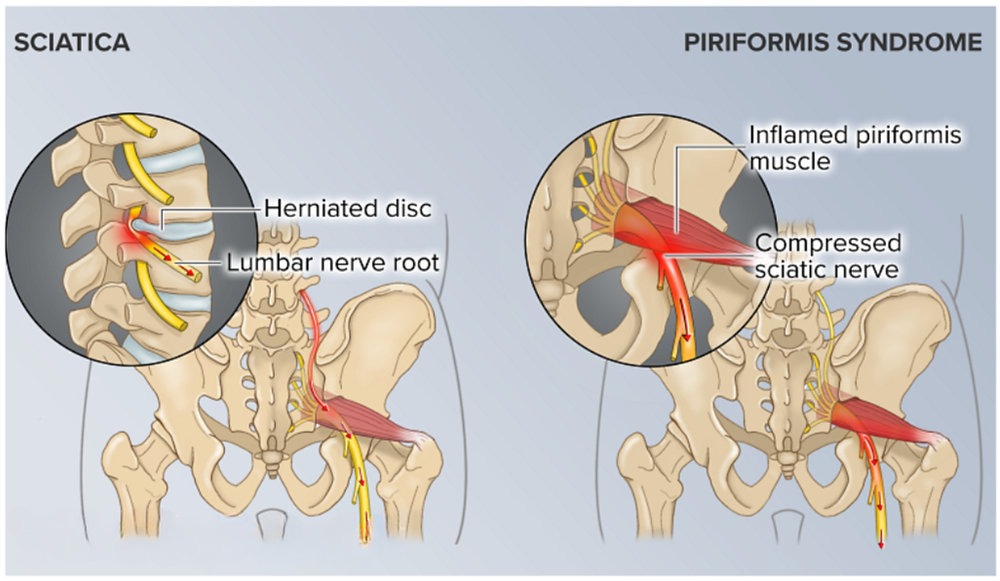
The reason is simple. Piriformis syndrome often mimics disc-related sciatica but originates from a deep hip muscle that irritates the sciatic nerve.
If you’ve been struggling with deep buttock pain that worsens with sitting, pain that shoots down your leg but doesn’t show up on imaging, or symptoms that haven’t responded to typical sciatica treatments, you may have piriformis syndrome.
| Dr. Crist’s Expert Insight: “Piriformis syndrome is one of the most frustrating conditions patients deal with because it mimics sciatica but does not show up on MRI. The key is recognizing that a tight piriformis is usually compensating for SI joint dysfunction or lumbar instability. Treat the muscle alone and it keeps coming back. Treat the joint dysfunction causing the muscle to tighten and you get lasting results.” |
Understanding Piriformis Syndrome
What Is Piriformis Syndrome?
Piriformis syndrome occurs when the piriformis muscle irritates or compresses the sciatic nerve.
The piriformis is a small but powerful muscle located deep in the buttock.
When it becomes tight, inflamed, or spasmed, it can produce pain that radiates from the buttock down the back of the leg, closely resembling sciatica caused by a disc problem.

Piriformis Muscle Anatomy and Function
Location
- Deep in the buttock beneath the gluteus maximus
- Runs from the sacrum to the top of the femur
- The sciatic nerve passes underneath or through the muscle in some individuals
Normal Function
- Externally rotates the hip
- Assists with hip abduction when the hip is flexed
- Stabilizes the pelvis during walking and running
- Works with other deep hip rotator muscles
What Goes Wrong
- Muscle becomes tight or spasmed
- Sciatic nerve becomes irritated or compressed
- Pain radiates down the leg
- Symptoms closely mimic lumbar disc sciatica
Piriformis Syndrome vs True Sciatica
Piriformis Syndrome vs. True Sciatica: What’s the Difference?
Both conditions can cause buttock pain and leg symptoms, but the source is completely different—and so is the treatment.
| Characteristic | Piriformis Syndrome | True Sciatica (Disc-Related) |
| Pain Origin | Deep buttock muscle irritating nerve | Spinal disc compressing nerve root |
| Primary Trigger | Sitting 20-30 minutes, hip rotation | Bending forward, coughing, sneezing |
| Pain Pattern | Deep buttock ache, may radiate down leg | Lower back to leg, follows specific nerve path |
| MRI Findings | Normal discs | Usually shows disc herniation |
| What Makes It Worse | Sitting, climbing stairs, crossing legs | Forward bending, prolonged standing |
| What Helps | Walking after sitting, stretching | Rest, avoiding flexion |
| Clinical Test | FAIR test positive | Straight leg raise positive |
| Tenderness | Deep in buttock, very specific | Along spine and nerve path |
Why the Difference Matters
Piriformis syndrome is primarily a muscle and joint-driven problem, often tied to SI joint dysfunction or pelvic instability. Disc sciatica is a spinal disc and nerve root problem.
Because of this:
- Piriformis syndrome responds best to SI joint correction, piriformis muscle release, and hip stabilization
- Disc-related sciatica responds best to spinal decompression, lumbar adjustments, and disc unloading strategies
Treating piriformis syndrome with disc-focused care often fails. Treating disc sciatica with stretching alone almost always fails.
Can You Have Both?
Yes. Some patients have both piriformis syndrome and disc-related sciatica at the same time. This is especially common in chronic cases or after previous low back injuries.
In these situations:
- Disc irritation may sensitize the sciatic nerve
- The piriformis tightens to protect an unstable pelvis
- Symptoms become more severe and harder to resolve without addressing both sources
This is why a thorough chiropractic exam that evaluates the lumbar spine, SI joints, hip mechanics, and muscle function is essential. Identifying the true driver of your pain is the difference between temporary relief and lasting recovery.
What Causes Piriformis Syndrome?
Piriformis syndrome rarely develops from a single isolated issue. In most cases, it’s the result of multiple mechanical stresses that overload the piriformis muscle and force it to compensate.
Understanding the true cause is essential, because treating symptoms without correcting the source leads to short-term relief and frequent recurrence.
Primary Causes
Biomechanical dysfunction is the primary driver of piriformis syndrome and accounts for the majority of cases.
- SI joint dysfunction (60-70% of cases)
The piriformis acts as a stabilizer for the sacroiliac joint. When the SI joint becomes restricted or unstable, the piriformis tightens to protect the joint. Over time, this constant contraction leads to muscle spasm and sciatic nerve irritation. - Lumbar spine restrictions
Restricted motion at L4-L5 or L5-S1 alters nerve signaling to the hip muscles. This creates faulty activation patterns that cause the piriformis to overwork while the gluteal muscles underperform. - Pelvic misalignment
Rotation or tilt of the pelvis changes the length and tension of the piriformis muscle. Even small alignment issues can significantly increase strain on this deep muscle. - Hip joint restrictions
Limited hip mobility forces the piriformis to compensate during walking, running, and climbing stairs. The muscle becomes overloaded trying to control movement the hip joint should be handling. - Leg length discrepancies
Structural or functional leg length differences alter pelvic mechanics. The piriformis on the longer or more stressed side often becomes chronically tight. - Poor gluteal muscle activation
When the gluteus maximus and medius fail to fire properly, the piriformis is recruited to stabilize the pelvis. This is one of the most common reasons piriformis syndrome becomes chronic.
Direct Muscle Causes
While less common than biomechanical issues, direct irritation of the muscle can trigger symptoms, especially when combined with joint dysfunction.
- Prolonged sitting
Sitting places direct pressure on the piriformis, reducing blood flow and increasing tension. Long workdays, commuting, and travel are common triggers. - Wallet in the back pocket
Constant compression of the piriformis and sciatic nerve from sitting on a wallet is a well-documented cause, often referred to as “wallet neuritis.” - Overuse from running or cycling
Repetitive hip rotation without proper recovery overloads the piriformis, especially when gluteal strength is insufficient. - Falls or direct trauma to the buttock
A fall can cause local inflammation, muscle guarding, and scar tissue formation, leading to persistent irritation.
Contributing Factors
These factors do not cause piriformis syndrome on their own, but they significantly increase the risk and slow recovery.
- Weak gluteus medius and maximus
Weak stabilizers force the piriformis to work overtime. - Tight hip flexors
Anterior hip tightness alters pelvic position and increases stress on posterior hip muscles. - Poor core stability
Inadequate trunk control allows excessive pelvic motion, increasing strain on the piriformis. - Foot overpronation
Excessive foot collapse changes leg mechanics and increases rotational stress up the chain to the hip and pelvis. - Previous low back injury
Prior injuries often leave behind altered movement patterns and unresolved joint restrictions that predispose the piriformis to tighten.
Symptoms of Piriformis Syndrome
Primary Symptoms
Piriformis syndrome symptoms are often positional and activity-dependent.
- Deep buttock pain that feels tight, aching, or burning
- Pain radiating down the back of the leg, often stopping above the knee but sometimes extending lower
- Pain worsened by sitting, especially after 20 to 30 minutes
- Difficulty climbing stairs or hills due to hip engagement
- Pain with hip rotation, crossing the legs, or getting in and out of a car
Many patients notice symptoms improve temporarily with walking or standing and worsen again with prolonged sitting.
Chiropractic Treatment Techniques for Piriformis Syndrome
Can a Chiropractor Help with Piriformis Syndrome?
Yes. A piriformis syndrome chiropractor addresses both the tight muscle and the joint dysfunction causing it to tighten.
This is why chiropractic care consistently outperforms treatments that focus only on stretching or massage.
Why Chiropractic Works for Piriformis Syndrome
The key insight: If your piriformis is tight because your SI joint is restricted or unstable, no amount of stretching, massage, or muscle relaxants will provide lasting relief.
The muscle will keep tightening as long as it’s compensating for the unstable joint.
Chiropractic care corrects the mechanical dysfunction first, then releases the muscle, then strengthens the weak stabilizers. This sequence is what creates lasting results.

The Five-Component Chiropractic Treatment Approach
1. SI Joint and Lumbar Adjustments
The piriformis often tightens to stabilize an unstable SI joint. Adjustments restore normal motion and remove the mechanical trigger.
- Restores SI joint mobility
- Reduces nerve irritation
- Often produces immediate pain relief
- Prevents recurrent muscle tightening
2. Targeted Piriformis Muscle Release
Active Release Technique (ART)
- Sustained pressure while the patient moves the hip
- Breaks adhesions and frees the sciatic nerve
- Immediate improvement is common
Myofascial and Trigger Point Release
- Sustained pressure for 60-90 seconds
- Deactivates painful trigger points
- Improves blood flow and mobility
Instrument-Assisted Mobilization
- Used for chronic or stubborn cases
- Breaks down scar tissue
- Stimulates healing response
3. Specific Piriformis Stretching
Generic stretches miss the piriformis. Precision matters.


- Figure four stretch
- Seated piriformis stretch
- Pigeon pose for advanced flexibility
Hold stretches for 30 to 60 seconds, 3 to 5 repetitions, several times daily.
4. Gluteal and Hip Strengthening
Weak glutes force the piriformis to compensate.

- Clamshells
- Bridges
- Side-lying hip abduction
- Single-leg balance drills
5. Biomechanical Correction
- Remove wallet from back pocket
- Improve sitting ergonomics
- Correct gait mechanics
- Address footwear and foot mechanics
- Improve core stability
“The mistake most people make with piriformis syndrome is only stretching the muscle. Stretching helps temporarily, but if your SI joint is restricted, the piriformis tightens right back up. Adjust the SI joint first, then release the muscle, then strengthen the glutes. That order matters.” – Dr. Jason Crist
Treatment Timeline and Expectations
How Long Does Piriformis Syndrome Take to Heal?
Most patients improve within 4-8 weeks when treatment addresses both muscle and joint dysfunction.
| Timeframe | Expected Improvement | What’s Happening |
| Weeks 1-2 | 30-40% pain reduction | SI joint mobility restoring, acute muscle spasm calming, initial inflammation reducing |
| Weeks 3-6 | 60-70% improvement | Movement patterns correcting, muscle balance improving, sitting tolerance increasing |
| Weeks 7-10 | 80-90% improvement | Full sitting tolerance restored, return to normal activities, prevention phase beginning |
Maintenance care reduces recurrence to 10-15%.
Chiropractic vs Other Treatments for Piriformis Syndrome
| Treatment | Addresses Muscle | Addresses Joint Dysfunction | Success Rate | Timeline | Recurrence Rate |
| Chiropractic | Yes | Yes | 75-85%* | 4-8 weeks | 10-15%** |
| Massage Therapy | Yes | No | Temporary relief | Ongoing sessions needed | 50-60% |
| Stretching Alone | Partial | No | Low for chronic cases | Variable | 60-70% |
| Physical Therapy* | Yes | Sometimes | Moderate | 8-12 weeks | 30-40% |
| Cortisone Injections | No | No | 40-60% short-term | Single event | High |
| Muscle Relaxants | Symptom masking | No | Temporary | While medicated | 100% |
*Based on clinical outcomes at Crist Chiropractic
**With proper maintenance care and home exercises
***PT effectiveness improves significantly when combined with chiropractic care
Why chiropractic care stands out: It’s the only approach that consistently addresses joint dysfunction, muscle tension, nerve irritation, and biomechanical correction in one integrated treatment plan.
Home Care and Prevention
Daily prevention is essential.
- Stretch the piriformis 2 to 3 times daily
- Strengthen glutes 3 to 4 times weekly
- Avoid prolonged sitting
- Stand every 30 to 45 minutes
- Maintain SI joint mobility with periodic chiropractic care
Specialized Piriformis Syndrome Care in Franklin, TN
At Crist Chiropractic, care focuses on correcting SI joint dysfunction, releasing the piriformis muscle, and restoring proper biomechanics.
With over 25 years of experience, patients receive comprehensive, results-driven care rather than temporary symptom relief.
Piriformis syndrome does not have to mean chronic buttock pain or limited sitting tolerance. Chiropractic care offers lasting relief by addressing the joint dysfunction and biomechanical stress causing the piriformis muscle to tighten.
Early, comprehensive care leads to faster and more durable results.
Key Takeaways
- 75-85%success rate
- SI joint correction is essential
- Combined approach outperforms isolated treatments
- Most patients improve significantly within 4-6 weeks
Frequently Asked Questions About Chiropractic Treatment for Piriformis Syndrome
Can a chiropractor help with piriformis syndrome?
Yes. Chiropractors address both the tight piriformis muscle and the underlying SI joint dysfunction or spinal restriction causing it to tighten.
At Crist Chiropractic, 75-85% of piriformis syndrome patients achieve significant relief within 4-8 weeks through comprehensive care that corrects joint mechanics, releases muscle tension, and restores proper movement patterns.
Is a chiropractor good for piriformis syndrome?
Chiropractic care is one of the most effective non-surgical treatments for piriformis syndrome because it treats the root cause—not just symptoms.
While massage and stretching provide temporary relief by addressing the muscle alone, chiropractic care corrects the SI joint restriction or lumbar dysfunction that’s forcing the piriformis to stay tight.
This is why chiropractic produces longer-lasting results with significantly lower recurrence rates.
How does a chiropractor treat piriformis syndrome?
Treatment includes five key components:
(1) SI joint and lumbar adjustments to restore normal joint motion
(2) targeted piriformis muscle release using Active Release Technique and myofascial work
(3) specific piriformis stretching protocols
(4) gluteal and hip strengthening to prevent recurrence
(5) biomechanical corrections including ergonomics and movement pattern training.
This comprehensive approach addresses all factors contributing to the condition.
How long does chiropractic take to fix piriformis syndrome?
Most patients at Crist Chiropractic experience 30-40% improvement within the first 2 weeks, 60-70% improvement by week 6, and 80-90% improvement within 8-10 weeks.
Chronic cases (symptoms lasting 6+ months) may require 10-12 weeks for full resolution. Timeline depends on symptom duration, severity of SI joint dysfunction, and compliance with home exercises.
What is the best treatment for piriformis syndrome?
The most effective treatment is a comprehensive approach that addresses joint dysfunction (SI joint and lumbar adjustments), muscle tension (piriformis release and trigger point therapy), muscle imbalances (gluteal strengthening), and biomechanical stress (ergonomics and movement training).
No single treatment alone—whether stretching, massage, or injections—addresses all these factors, which is why isolated treatments often fail or provide only temporary relief.
How do I prevent piriformis syndrome from coming back?
Prevention requires ongoing maintenance:
(1) Continue daily piriformis stretching, especially after prolonged sitting
(2) Strengthen glutes 3-4 times weekly indefinitely
(3) Take standing breaks every 30-45 minutes during work
(4) Maintain proper sitting ergonomics and remove wallet from back pocket
(5) Receive periodic chiropractic adjustments to maintain SI joint mobility (monthly or as needed).
With consistent prevention, recurrence rates drop from 40-50% down to 10-15%.
Don’t Let Piriformis Syndrome Control Your Life
Piriformis syndrome doesn’t have to mean chronic buttock pain or limited sitting tolerance. Chiropractic care offers lasting relief by addressing the SI joint dysfunction and biomechanical stress causing your piriformis muscle to tighten.
Key takeaways:
- 75-85% success rate with comprehensive chiropractic care
- SI joint correction is essential for lasting relief
- Combined approach outperforms isolated treatments
- Most patients improve significantly within 4-8 weeks
- Early treatment prevents chronic patterns from developing
Stop treating just the muscle. Address the root cause.
Ready to resolve your piriformis syndrome with proven treatment techniques?
📞 (615) 771-0022
🌐 Book Online
Crist Chiropractic | Franklin, Cool Springs & Brentwood, TN
Tennessee Chiropractor of the Year (2018) | 25 Years Treating Piriformis Syndrome
⭐ 500+ Five-Star Reviews
Dr. Jason Crist founded Crist Chiropractic in Franklin, Tennessee, with a vision to provide health and healing naturally. His personal journey of avoiding surgery ignited his passion for non-invasive care, earning him "Chiropractor of the Year" for his holistic approach.


Recommended for You

ARE YOU A CANDIDATE FOR SPINAL DECOMPRESSION?
Continuous back pain can make the simplest of tasks – or even just trying to live your regular day-to-day life – completely unbearable. So naturally, when you start suffering from back pain, your first thought will be to go to a chiropractor to see what they suggest. In many cases, they may recommend spinal decompression…
Read More
Effective Fibromyalgia Chiropractic Treatment Techniques for Lasting Relief
Discover how targeted chiropractic care may relieve fibromyalgia symptoms, reduce pain, and improve daily function and quality of life.
Read More
Tech Neck: The Modern Malady and How Chiropractic Care Can Help
Prevent and relieve tech neck with better posture, ergonomic habits, targeted exercises, and chiropractic care for lasting neck health.
Read More